Tamalanrea-Makassar. The Forestry Engineering Study Program, Faculty of Forestry, Hasanuddin University held a public lecture with the theme “A Botanist’s Story: From Field to Laboratory for Biodiversity Conservation”. The activity took place starting at 09.30 in the GA 102 Lecture Room and virtually via zoom meeting, Wednesday (29/5/2024).
Starting the activities of the Head of the Forestry Engineering Study Program, Faculty of Forestry, Hasanuddin University, Dr. A. Detti Yunianti, S.Hut., M.P. In his speech, he thanked the resource person for his willingness to attend and be a resource person at this activity.
“The theme of the public lecture this time is quite interesting because it discusses botany or plant science which includes research on structure, function, evolution, classification, distribution and interactions of plants with their environment which is of course very useful for increasing students’ knowledge and knowledge,” said A Detti Yunianti.
Dr. A. Detti Yunianti said that botany has broad benefits in various areas of life. Economically, botany contributes to agriculture, forestry and the food industry by studying cultivated plants, increasing crop yields and developing superior varieties.
Present as a resource person, Prima Wahyu Kusuma Hutabarat, S.P., M.Sc. (Biosystematics and Evolution Researcher, ORHL – BRIN) in his material conveyed the concept of taxonomy and plant systematics as a branch of botany.
Systematics is classification and evolutionary relationships while taxonomy is identification, classification and naming.
“Systematics and taxonomy are important because these two things are fundamental science or the basic sciences in giving names or identities, in other words, how to name organisms,” explained Prima Wahyu.
The approaches in taxonomy are morphology, molecular biology, cytology, phytochemistry, ecology and behavior.
The method of searching and collecting taxonomic data is by providing taxa names and nomenclature, publications, herbarium specimens and other additional sources.
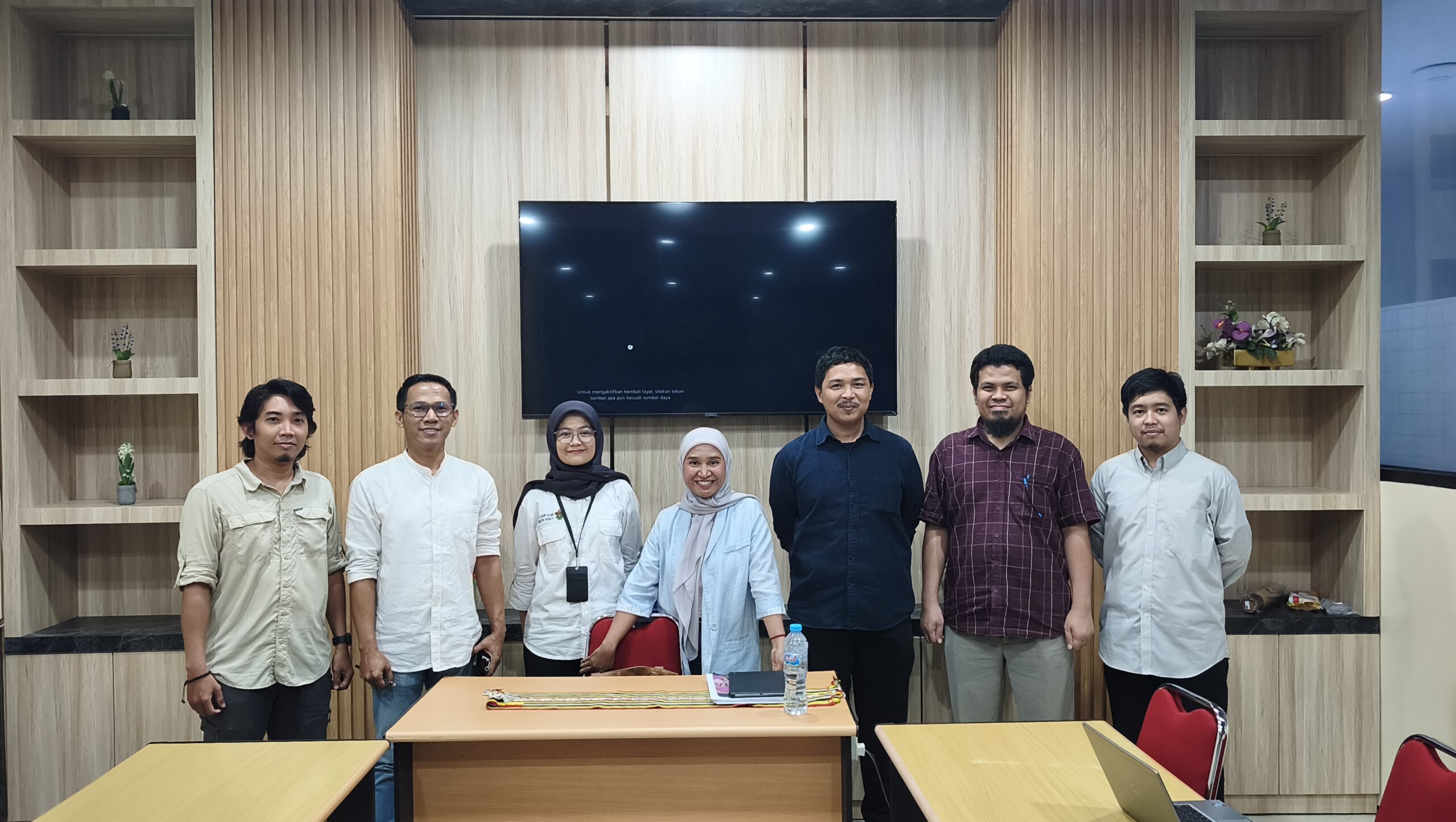
After the presentation of the material, the activity then continued with a discussion and question and answer session. This activity was guided by Iswanto, S.Hut., M.Si. (Lecturer at the Forestry Engineering Study Program Unhas), went smoothly until 11.30 WITA and ended with a group photo.