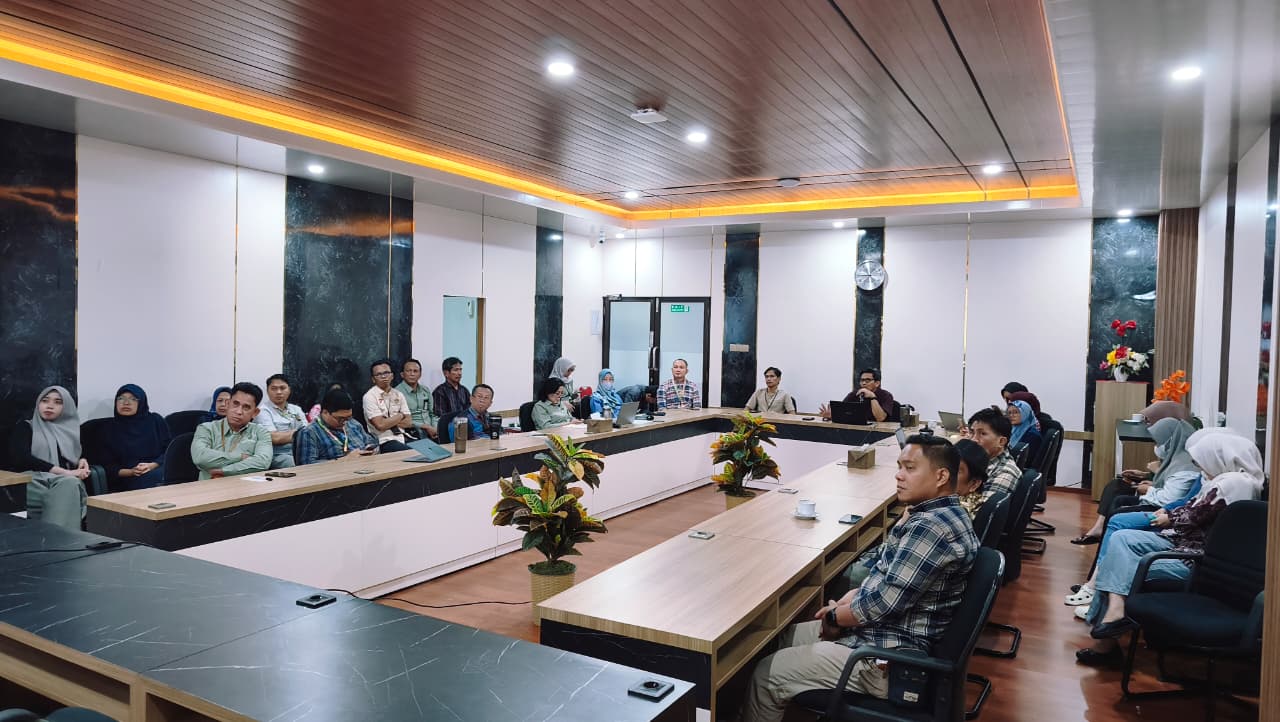
Tamalanrea-Makassar. The Forestry Engineering Study Program, Faculty of Forestry, Hasanuddin University (Unhas) held a public lecture with the theme “Limnology and Lake Biodiversity Studies”. The activity took place starting at 13.00 WITA in the Senate Meeting Room, 2nd Floor, Faculty of Forestry, Unhas Tamalanrea Campus, Makassar, and was connected directly via zoom meeting, Thursday (3/10/2024).
Starting the activities of the Head of the Forestry Engineering Study Program, Faculty of Forestry, Hasanuddin University, Dr. Ir. Siti Halimah Larekeng, S.P., M.P. In his speech, he expressed his gratitude for the presence of the resource persons at this public lecture activity and hoped that this activity could provide new knowledge and knowledge to our students about limnology and lake biodiversity.
“Thank you for the presence of the resource person at this activity. I really hope that students can take part and make good use of this activity to increase your knowledge of the study of limnology and soil biodiversity. The material discussed and presented by the resource person is related to the forestry engineering study program,” explained Dr. Halima.
After the speech, the activity continued with the presentation of material from the resource person, namely Prof. Dr. Tri Retnaningsih Soeprobowati, M.App., Sc. (Diponegoro University lecturer) presented material with the theme “Limnology and Lake Biodiversity Studies”.
Prof. Tri Retnaningsih explained that limnology is the study of the structure and function of fresh water and its relationship with the physical, chemical and biological environment. Meanwhile, Paleolimnology is a science that studies fresh waters by utilizing physical, chemical and biological information stored in sediments, to reconstruct past conditions as a basis for developing lake management.
“Sediment draining is carried out to reconstruct past conditions based on organisms preserved in sediment so that it can describe the environmental conditions when these organisms lived,” explained Prof. Tri.
Prof. Tri also explained about diatoms, where diatoms are single-celled eukaryotic algae mainly characterized by a silica cell wall consisting of two valves, together called a frustule, which can function as a bioindicator for integrating the total environment and responding to a series of complex environmental conditions.
After presenting the material, the activity then continued with a joint discussion session. This activity was attended by 100 participants and ran smoothly until 15.00 WITA.