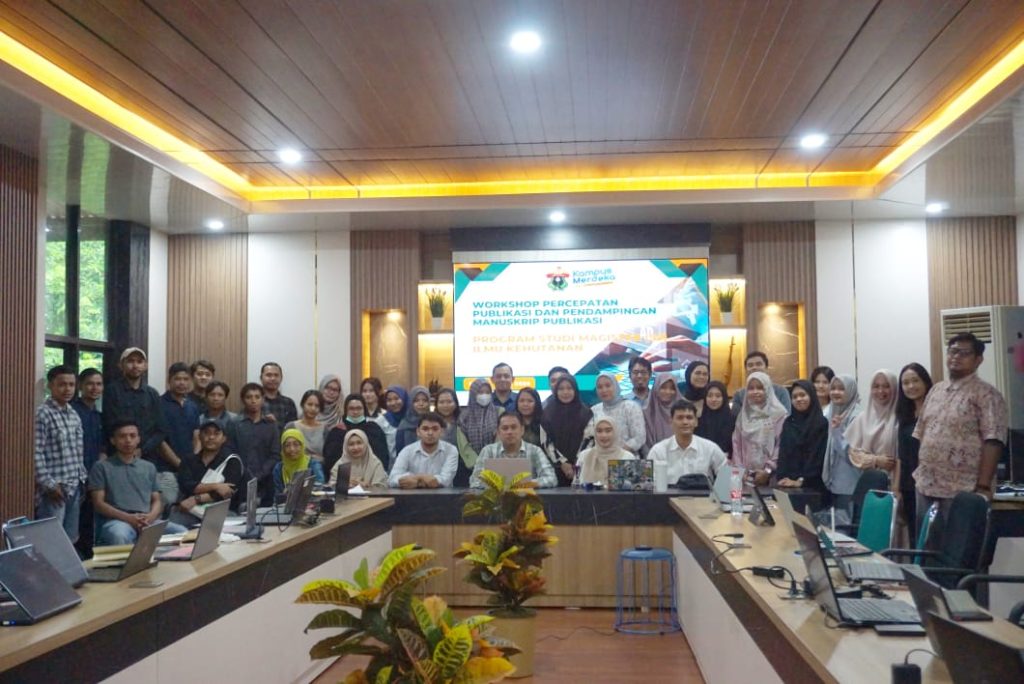
Tamalanrea-Makassar. The Faculty of Forestry, Hasanuddin University (Unhas) through the Forestry Science Master’s Study Program (S2) held a Workshop on Accelerating Publication and Facilitating Publication Manuscripts. Activities take place starting at 08.00 WITA, Saturday (11/5/2024).
Starting the activities, the Dean of the Faculty of Forestry, Unhas, Dr. Ir. A. Mujetahid M., S.Hut., M.P., IPU. In his speech, he expressed his gratitude to the Head of the Forestry Science Master’s Study Program (S2) for organizing this activity to help and facilitate Master’s students in accelerating publication and writing publication manuscripts in order to complete student studies on time.
“Thank you to the Head of the Forestry Science Master’s Study Program, Faculty of Forestry, Unhas, for making a new breakthrough in accelerating the completion of student studies, namely accelerating and assisting the writing of publication manuscripts which is done earlier for new students,” said Dr. A. Mujetahid.
Dr. A. Mujetahid said that master’s program students could take advantage of activities to help and facilitate the writing of publication manuscripts. He hopes that after this activity there will be assistance for students from the stage of writing a publication manuscript to publishing it in a reputable international journal indexed by Scopus.
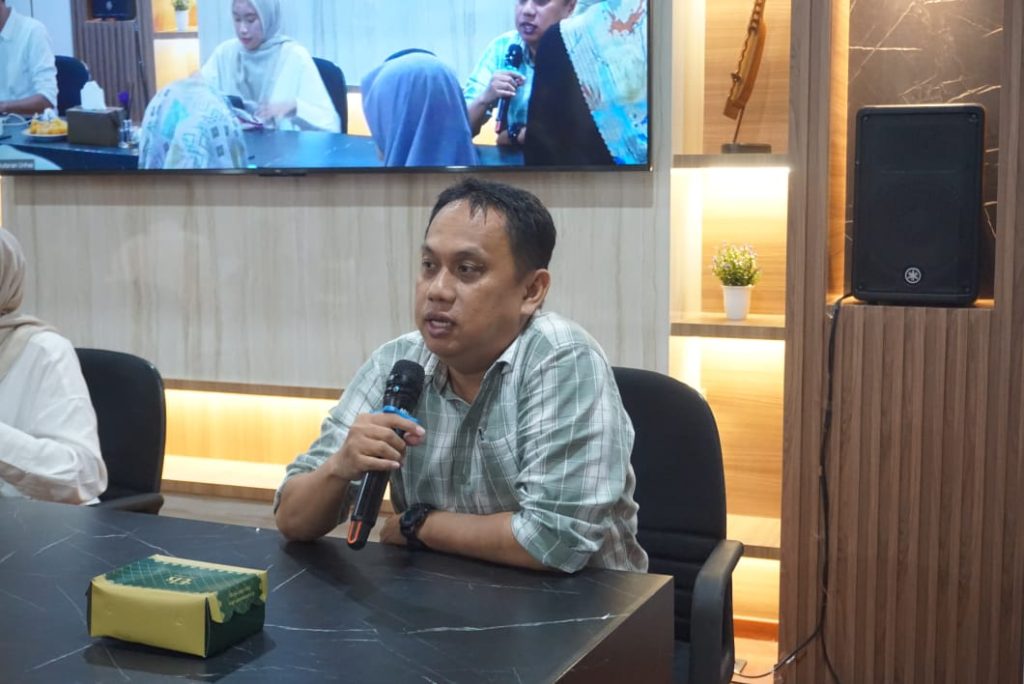
Present as a resource person, Ir. Mukrimin, S.Hut., M.P., Ph.D., IPU. (Chairman of the Master of Forestry Science Study Program, Faculty of Forestry, Hasanuddin University), Dr. Nurhady Sirimorok, M.A. (Lecturer and Management Team of the Forest and Society Journal, Faculty of Forestry, Unhas) and Dr. Song of Tirtayasa Putra Pangestu, S.Hut., M.Si. (Chair of PMU, Faculty of Forestry, Hasanuddin University).
Head of the Forestry Science Master’s Study Program (S2), Faculty of Forestry, Hasanuddin University, Ir. Mukrimin, S.Hut., M.P., Ph.D., IPU. in his material conveyed the policy of accelerating publication and writing publication manuscripts.
The academic regulations for the master’s program are contained in Hasanuddin University Chancellor’s Regulation Number 30/UN4.1/2023 concerning the length of the student study period, namely a minimum of 3 semesters and a maximum of 6 semesters.
“In an effort to minimize or prevent students from being slow in completing their studies, the Faculty of Forestry, Hasanuddin University, intensively socializes academic regulations, conducts student academic dialogue, regularly monitors student study progress, provides a letter submitting the study period one year before the study ends and monitors and evaluates the performance of supervisors. ,” said Mukrimin, Ph.D.
Furthermore, Mukrimin, Ph.D. said that not only that, the Unhas Faculty of Forestry also facilitated the acceleration of publication and provided assistance in writing publication manuscripts until they were submitted and published in reputable international journals indexed by Scopus.
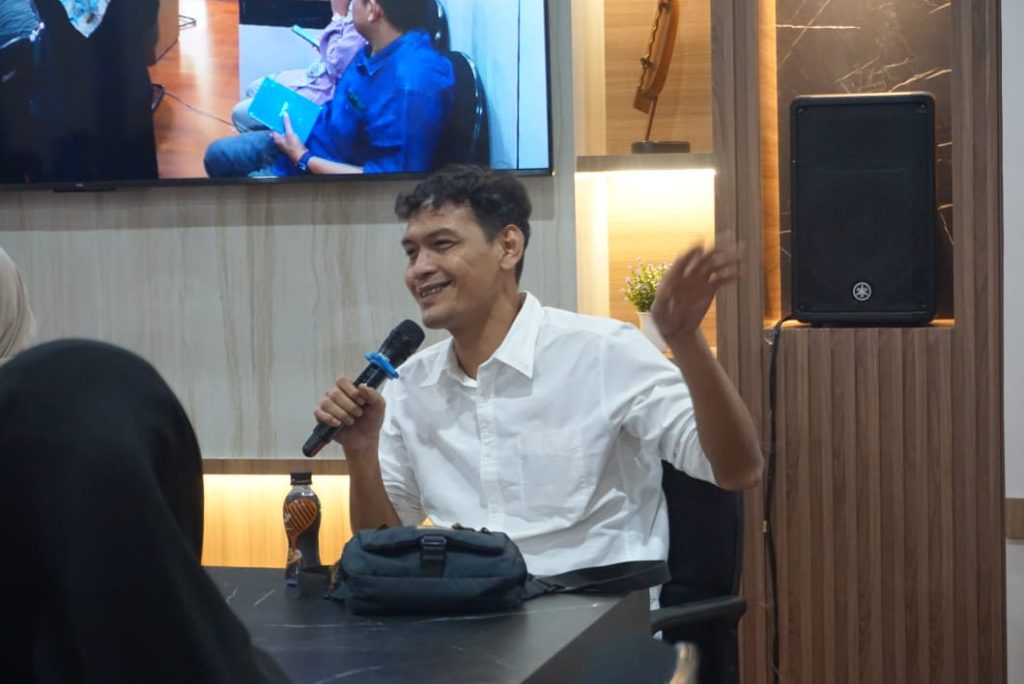
Dr. Nurhady Sirimorok, M.A. (Lecturer and Forest and Society Journal Management Team, Faculty of Forestry, Unhas), presented material related to accelerating publication and assistance in writing publication manuscripts for students of the Forestry Science master’s program, Faculty of Forestry, Unhas.
“One way that is effective and helps us in writing publication manuscripts is to form a community because in this community we can share with each other and more or less get references in research and writing publication manuscripts,” explained Dr. Nurhady.
Starting to write a thesis research article, first build a framework (outline) that can be more helpful and easier in the research article writing stage. The writing framework includes the research design, the total number of writing outlines is approximately 3-4 pages, starting with the main part of the scientific article and writing sub-headings.
“Building a writing framework opens up the opportunity to develop the logic of an article where 90 percent of writing an article is the framework and when you encounter difficulties or dead ends you can return to the writing framework,” explained Nurhady.
Some examples of frameworks for writing scientific articles are abstract, introduction, methods, results, discussion/analysis and conclusions.
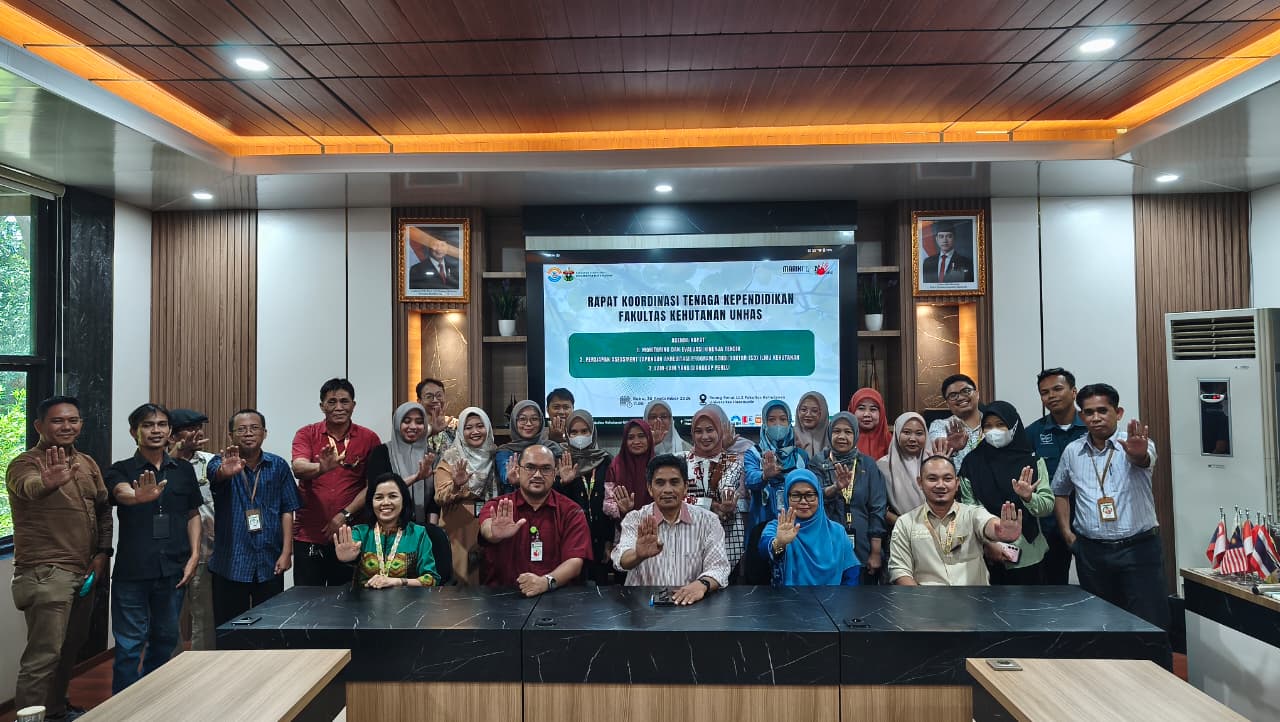
After the presentation of the material, the activity was continued with a discussion session. The activity went on smoothly until 16.00 WITA and ended with a group photo.